
The Happy Lovers
Gustave Courbet, 1844The pioneering Realism of Gustave Courbet had a profound impact on the course of 19th century art. He famously kicked against the polished academic style of his contemporaries – an independence of spirit in part made possible by his family’s considerable wealth. At the Paris Salon of 1850, he caused uproar with The Burial at Ornans – a painting of epic scale that defied all the pictorial conventions of the day. This was neither a gathering of aristocrats, nor figures from the antique past. These were ordinary people, presented with a stark and unflinching directness. Unlike the idealising tendencies of neoclassicism, Courbet’s Realism was an attempt to capture the world ‘as it was’. The unaffected honesty that he brought to his landscape painting would inspire the Impressionists. Towards the end of his life, involvement in the radical politics of the French Commune would lead to imprisonment and eventual exile. However, his single-minded vision had paved the way for the avant-garde and Modernism itself.
Related works


The Annunciation: The Angel

The Escape, The Ford

The Apparition of the Virgin the St. James the Great

The Finding of the Savior in the Temple

The Creation of the Sun and the Moon

The Princess and the Monkey

The Assumption of the Virgin
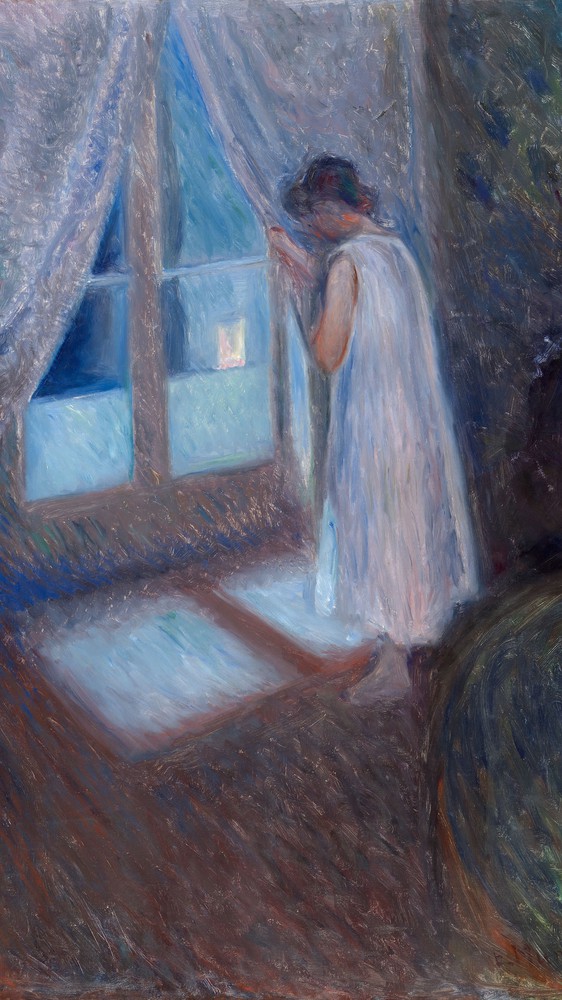
The Girl by the Window

The Virgin Adoring the Host
