Behind the Scenes with A.L. Crego
The artist talks about using accidents effectively, “amniotic culture” & more
In our series Behind the Scenes, artists answer questions about their creative process, philosophy, and more. This installment features A.L. Crego, a self-taught GIF artist from northern Spain who aims to create “an immersive loop that resonates with the audience and encourages them to think.” See his creations yourself here. (Read our other exclusive interviews with artists here.)

What’s the best advice you’ve ever received?
An aphorism by Da Vinci: “The advice, if it is good, usually hurts.”
What do you consume (art, music, books, film) to help fuel your work?
I think it’s more about what I don’t consume. I mean, I don’t watch series, I don’t follow any sports, and I don’t have any social networks. I think that we all have a “vessel of creativity,” and if you fill it with other people’s ideas constantly, yours will be a reflection of these ideas and it will be harder to find yours. So I try to use my time to try new things, which give me more ideas, but I always feel like I am two years behind them. Nevertheless, I usually obtain more “inspiration” from texts and words because these mediums don’t have an image, so I have the freedom to build it in my mind and then translate it into a GIF. There are books, random people in the streets, poetry, rap, and almost any kind of music. I say this while, at the same time, I really know we’re all immersed in this visual era, so I guess I’m influenced by all the media around. I like to call it “Amniotic Culture.”
What’s an image that represents what success means to you?

How do you know when a work is finished?
Big question; small answer: When you are not able to do it better because of your skills. Or, in my case, when it bores you. Anyway, each person has his method.
Do you like to talk about your own art when it’s in progress?
Sure. I don’t see any problem with it. In fact, I think it’s really healthy for oneself and for the pieces because artwork is always in progress. This is the reason we say “piece” of art or “artwork.” What we do are only “pieces” of something that we can’t even touch. “Art” is something different for each one, so we only create pieces to reach this word, and talking about what you create helps you see from different points of view.
If you could have any artist, living or dead, paint a portrait of you, who would you choose?
Dead: Ray Charles.
Alive: Thomas Ott.
Send an image of your workspace.

All art is theft—true or false?
Very true. You can call it inspiration, knowledge, or theft as long as you make it really yours and transform it into another creation. Everything comes from another thing, but most times we don’t realize where exactly. It’s not about the things themselves—it’s about how to look, digest, and regurgitate them. For me, understanding that originality doesn’t exist was really motivating. Originality consists of knowing what others don’t. Paradoxically, the deeper you dig, the higher you think.
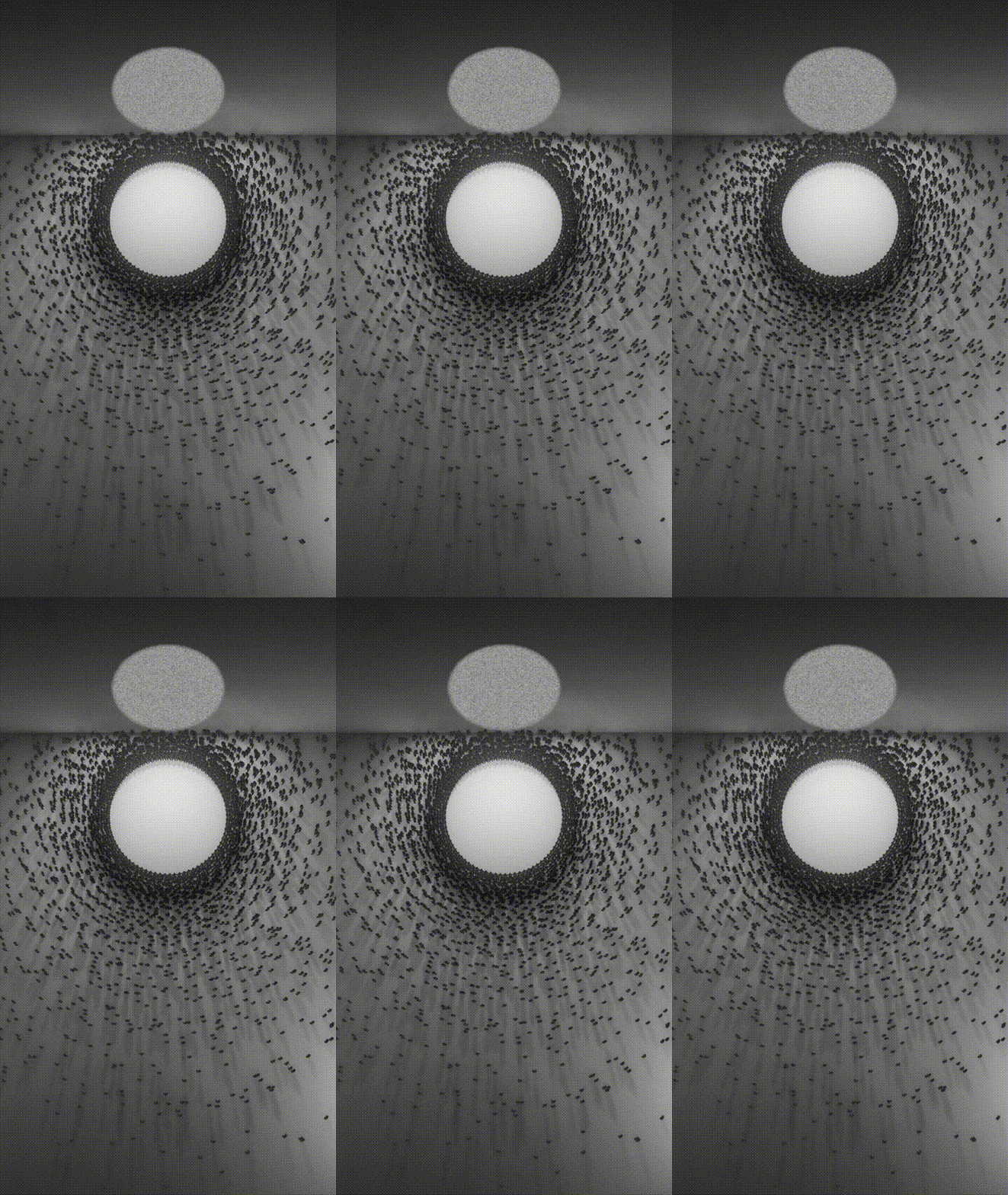
My “Silence” series is an example of “theft.” With Juán Genovés work in mind, I tried to do the opposite. In his pictures, at first sight, you see a crowd, but when you look closer, you realize that the people are just splatters and random little objects placed in the correct position. For my series, I wanted to create something that at first seems to be particles, but if you look closer, you can see that there are a lot of little people. I also love how Genovés plays with negative spaces, so I found in this gap the place to create the symbol of “silence” inside this digital crowd. All these people and silence are presided by archetypal signs filled with visual noise as a symbol of all this environment of metadata that people are generating, but at the same time, we fear this new arrival of technology, automated works, and a change of the paradigm.
What’s an image that represents creative flow?
How much of your work is accidental?
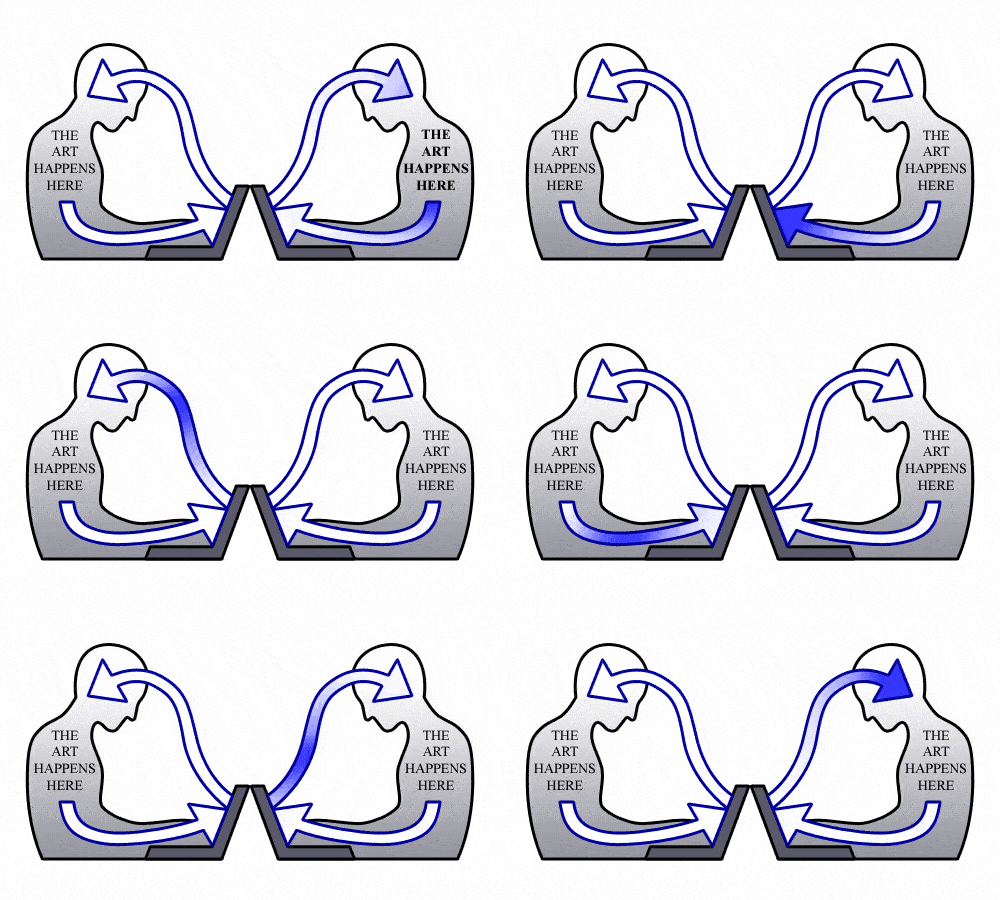
Most of it, but it usually comes from previous thoughts. I mean that something could be accidental, but if you have in mind this precise moment something that you were thinking about, the dots can connect as a puzzle and give you another point of view that boost an idea. For me, these accidents happen while I’m working on the computer. Sometimes when I’m trying to reach an effect, I collide with an “error” that generates a new horizon of possibilities. So I find it really useful to learn to read errors and let the accidents happen.
What were the last five songs you listened to?
“Cádiz State of Mind” by Dheformer & Ciclo
“Bleed” by Meshuggah
“Theme De Yoyo” by The Cinematic Orchestra
“Fake Messiah” by Lamb of God
“Catastrophic (feat. Saphir)” by Gizmo
If you could own the exclusive rights to any specific color, which would you choose (and why)? (i.e., Anish Kapoor owns Vantablack)
I will never do this. It’s like having the rights to air or water. But I’ll play. It would be gray because it has its own scale from white to black. Any other chromatic color has its equivalent in gray. I love grayscale and used to think that anything is what it is, despite the color. Half fun, half serious, color is just an ornament. Words have no color.